

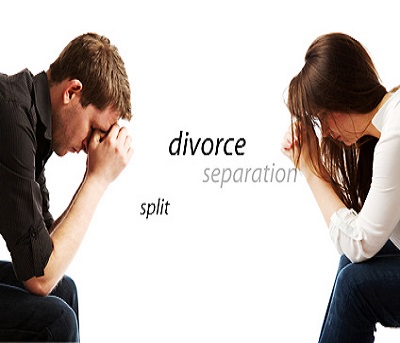
Divorce is a court judgment ending a marriage. The court requires a "legal reason" for the divorce. Grounds or reasons for a divorce are discussed starting at question 13. In addition to legally ending your marriage, the court looks at other issues which need to be decided before the divorce becomes final.
No. Married couples may choose to live apart from each other, but remain married, for religious, personal, or financial reasons, or for the sake of the children. You may decide to seek a Judgment of Separate Support or a Judgment of Support. A Judgment of Separate Support can decide custody.
Corporations Law Cases is a practice area slice of Thomson Reuters'
Unreported Judgments service, available as a separate product on all
cases related to corporations law in Australia.
Corporations Law Cases is a comprehensive, searchable collection of full text
case law on corporations matters reported in the the High Court, Federal Court
and State and Territory Supreme Courts.
More focused research. Our topical Corporations Law Cases database provide select
collections of specialist corporate related case law.


A Cheque is a bill of exchange drawn upon a specified banker & not to be
expressed to be payable otherwise than on demand.
A cheque is said to be dishonoured or bounced when it is presented for
payment to a bank but it is not paid because of some reason or the other.
A cheque becomes due for payment on the date mentioned on it.
Before issuing a cheque author of the cheque should ensure that he has sufficient funds in his account.
Lest, it would bounce with remarks ‘insufficient funds’.
Bouncing in common parlance is referred to dishonour of cheques.
The Disputes Redressal Agencies (District Forums, State
Commissions and National Commission ) under the Consumer Protection Act,
1986 adjudicate upon the complaints of consumers relating to defaults in products
and deficiency in service. `Service’
as defined in the Act includes the provision of facilities in connection with banking
The decisions of the State Commissions, the National Commission,
and the Supreme Court (as the final authority), on different aspects
of banking and other services offered by banks have been reported in various law journals.
A short compilation of the decisions from 1995 to 2005 has been made with a view to giving
a brief account of the principles laid down in these cases. Each case is given separately
along with the citation for enabling access to the full text of the case, whenever necessary.

Arbitration is a form of Alternative Dispute Resolution in which
the parties work out the disputed issue without going to court.
An impartial third party, known as an Arbitrator, is chosen by the parties
to listen to their case and make a decision.
The process of arbitration is overseen by a professional arbitrator,
who facilitates communication between two sides of a dispute. An arbitrator
may or may not be an attorney, and many retired judges take positions as arbitrators.
Often the most effective arbitrators have knowledge of, and experience in, the
subject of the disputes they hear. For instance, an employment law attorney, or retired
administrator in the state’s employment division, may be effective in resolving an
employment dispute.
Since arbitration became a popular method of settling disputes while avoiding overcrowded court calendars in the 1970s, many cases large and small have been settled by professional arbitrators.
The Consumer Protection Act, 1986 aims to provide better protection
of interest of consumers and enacts for the establishment of consumer
councils and authorities for settlement of consumer disputes and matters that
are connected therewith.
The Act extends to whole of India except the state of Jammu and Kashmir.
The Act applies to all goods and services and the central government may by
notification expressly exclude applicability of the Act to goods or services by
providing for the same in the notification.


NEW DELHI: Property disputes and family conflicts clog our judicial system and in a majority of cases, police detain the accused unnecessarily. These are the findings of Daksh, an NGO which analyses the performance of the judiciary. Around 66% of all cases studied are property-related litigations, and 10%, the second largest chunk, are family matters.
A legal description is a description of real estate that is sufficient to
identify it for legal purposes. When preparing a deed, it is important to use
the correct legal description. In most situations, the best practice is to use the
legal description from the most recent deed to the property.
There are a few different types of legal descriptions (discussed below),
but these distinctions are often irrelevant to the deed preparation process.

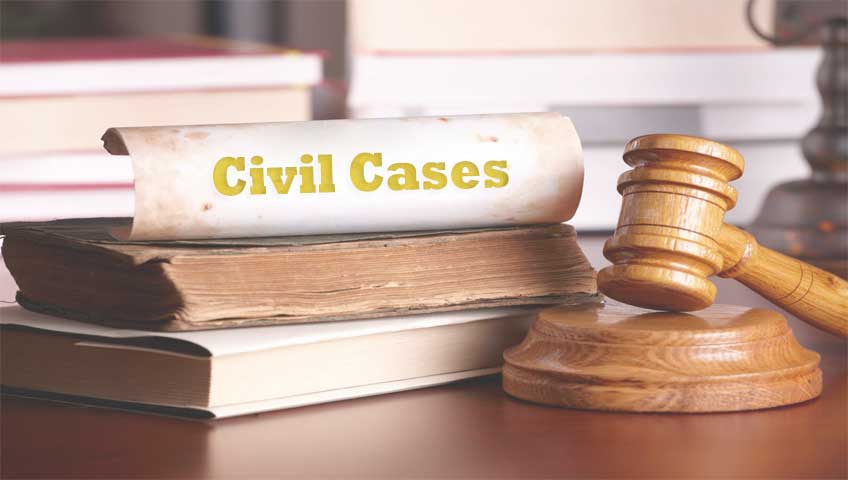
When you sue someone for damages, such as in an assault or defamation suit, you are engaging in a civil court action. The legal justice system is divided into two main courts: criminal and civil. Criminal courts try defendants for crimes against the state (hence, "The People" of a given state are the named plaintiffs), while civil courts try cases alleging wrongs by one party against another. Also, criminal convictions result in fines, incarceration, public service, or other such sentences, while civil cases determine whether the defendant is financially liable for the plaintiff's injuries. FindLaw's section on Civil Court Cases covers the stages of a civil case, provides a practical guide to lawsuits, and offers other information and resources related to civil court cases
Only the government initiates a criminal case, usually through the U.S. attorney’s office, in coordination with a law enforcement agency. Allegations of criminal behavior should be brought to the local police, the FBI, or another appropriate law enforcement agency.
Copyrights © 2017 Bhanu and co. All rights reserved.Design By Rynow Infotech